Author Archives: Sarah

Contemporary Art That Stands the Test of Time

Highlights of The Edge Auction 2017 to be held on March 5 in Kuala Lumpur includes serious works by some of the most desirable names in Malaysian contemporary art.

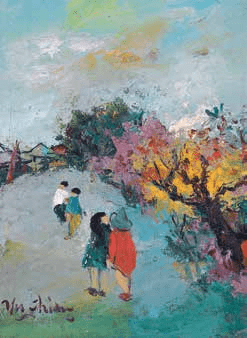
Young artists from the 1980s onwards tend to experiment with human figures to express socio-political situations, more than the modernists of the Sixties and Seventies, in response to the era of modernisation and political developments in Malaysia. Since then, the leading contemporary artists who have emerged and are widely recognised today include Ahmad Zakii Anwar, Jalaini Abu Hassan, Bayu Utomo Radjikin, Ahmad Shukri Mohamed, Zulkifli Yusoff, Chong Siew Ying, Kow Leong Kiang, Shia Yih Yiing and rising star Chong Ai Lei.

Thirty of the 118 lots on offer at The Edge Auction 2017 are contemporary artworks by 20 Malaysian artists and dated as early as 1983 up until 2015. On offer are an array of genres from batik art and “Nanyang” style to traditional landscape watercolour paintings, as well as abstract work and contemporary art that encapsulates the country’s current socio-political landscape. The contemporary segment features 30 artworks comprising a number of exceptional figurative paintings as well as non-representational works of art.

Artistic development

At an auction with a range of desirable works, collectors can observe the progression of established artists in terms of style and technique.For instance,Ahmad Zakii is represented in the sale by two distinctive artworks: a pair of paintings illustrating the traditional Balinese dance titled Legong 5 and 7,which are dated 2004 and priced at RM7,500 to RM10,000 for the lot, and a male figure executed in charcoal and acrylic medium on Canson paper. Titled Reclining Figure 6 and dated 2015, this work is 76cm by 182cm with an estimated of between RM48,000 and RM60,000. Both works demonstrate the artist’s ability to observe and render his subject matter with grace and precision.

Similarly, Jalaini’s early work, titled Alam Benda, illustrates his meticulousness as a student rendering still-life objects when the work was created in 1983. The more recent Dolah Ayam, from 2015, reflects his fascination with industrial space following his solo exhibition, Painting Industry, held in Singapore in 2015. Measuring 183cm by 183cm, Dolah Ayam, a nickname used in rural Malaysia to identify cockfighting champions, is estimated at between RM38,400 and RM48,000.The artist is considered one of the early adopters of bitumen in his artistic oeuvre. The discovery of this alternative medium occurred during his student days in New York in the 1990s.According to the artist, it is interesting to note the similarity of the colour tone in both artworks. His attraction to sepia-toned effects seems to have been subconsciously instilled from the treatment of colour in Alam Benda. Dolah Ayam, among a string of his other works, is executed in bitumen and acrylic. Both artworks highlight the artist’s creative progression from 1983 to 2015, preceding the discovery of bitumen and afterwards.

Opportunity

The secondary market provides an opportunity for art collectors to acquire early artworks by mid-career artists. For instance,Chong’s Cattleya is derived from one of the artist’s seminal series from the mid-2000s. The body of work represents a very private chapter in her life. Dated 2007, the work measures 113cm by 120cm and is estimated at between RM20,000 and RM25,000.

Similarly, Ahmad Shukri’s Barcode series 10 and Barcode series 11 were created in 1997.The artist employs butterflies and other insects to represent nature in his creative oeuvre, as a symbol of freedom, beauty and harmony.Ahmad Shukri has always been concerned about the environment and its exploitation, especially the challenges that stem from human greed. Measuring 24cm by 25cm, the works are estimated at between RM4,000 and RM7,000 each.

Raduan Man’s Manusia (2002) oil on canvas, 130cm by 210cm is estimated at between RM18,000 and RM20,000
Zulkifli Yusoff’s Ahmad and his Shadows (1996) is estimated at between RM6,000 and RM8,000. The Ahmad series highlights the duplicity of people

International recognition

Almost all of the contemporary Malaysian artists featured in this sale have participated in exhibitions abroad. One of them, whose presence across the Causeway has been consistent since 1997, is Zulkifli. Going under the hammer in this sale is a charcoal on paper work from his provocative Ahmad series. Dated 1996, Ahmad and His Shadow III,which measures 75cm by 55cm, is expected to fetch RM6,000 to RM8,000. Zulkifli was Malaysia’s sole representative at Modernities and Memories, Recent Works from the Islamic World at the prestigious Venice Biennale, Italy, in 1998. His large-scale installation, titled Rukunegara 2: The Voice, was displayed at T.H.E.O. Arts at Art Stage Singapore in 2013. Another installation, titled Pendita, was exhibited at the Singapore Art Museum’s The Collectors Show — Weight of History that same year. A six-piece suite of installations, titled Rukunegara 1 Belief in God, which occupied a space on the ground floor of the Singapore Art Museum, was featured at Singapore Biennale 2013, themed If the World Changed.

More recently, an installation titled Hujan Lembing di Pasir Salak (2008) is being exhibited at Artist and Empire: (En) countering Colonial Legacies (until March 27) an exhibition presented at the National Gallery Singapore in association with London’s Tate Britain.

Rediscovery

Collectors will have a chance to rediscover talents whose early artworks are rarely found on the market, including Fauzan Omar, Yeoh Kean Thai and Choy Chun Wei. Fauzan’s Luminosity series, from the Nineties, consists of a quadruple panel of fabric collage and oil on canvas. Measuring 51cm by 245cm, the artwork is estimated at between RM7,000 and RM10,000.Fauzan obtained his Master’s degree in Fine Art from the Maryland Institute College of Art in Baltimore, the US, in 1984.

A solo exhibition was held at the Australian High Commission in Kuala Lumpur in November 1990 and in the catalogue, Wong Hoy Cheong — who participated in the 50th Venice Biennale in 2003 — wrote: “They left me an indelible impression — I was at once repulsed and mesmerised.These paintings compelled me to reconsider my earlier opinions.They were hardly formal.They appeared provocative and [too] serious to be dismissed. I needed and wanted to see more.”

Ismail Zain expressed his thoughts on Fauzan’s work in the catalogue, writing: “My feeling is when the dust of demystification finally settled on Abstract Expressionism and its derivatives in this country, some of Fauzan’s works, especially his latest, will emerge as the most significant works to appear at this point in time.”

Anthonie Chong’s figurative paintings from the Nineties are sought after by seasoned collectors. On offer is Seated Nude Figure (1995), measuring 122cm by 91cm and estimated at between RM9,000 and RM15,000,as well as Morning (1998),127cm by 105cm,and set to go under the hammer at the lower estimate of RM14,000.

Choy Chun Wei’s Shredding (2007), mixed media on canvas, 122cm by 122cm is estimated at between RM9,000 and RM12,000
Detail of Reclining Figure 6 (2015) by Ahmad
Zakii Anwar. It measures 76cm by 182cm and was exhibited at the Maritime Silk Road Art Festival 2015, Shanghai, China

Market demand

The regular appearance of an artist’s work at auction may denote demand in the market. For instance, Kow Leong Kiang’s Facescape of Bali 9, dated 2015 and measuring 150cm by 120cm, is estimated at between RM28,000 and RM35,000. Known for his portraits of a young local beauty of the East Coast in idyllic landscapes, Kow has advanced from his rustic and soft treatment to a more gestural approach through his application of brush strokes, as seen in Facescape of Bali 9.

Raduan Man’s early abstract work, Manusia, dated 2002, offers an opportunity for collectors to enhance their collections to include one of his early endeavours in abstract expressionism. Measuring 130cm by 210cm, the artwork is priced at between RM18,000 and RM20,000. Known for his printmaking on canvas technique, the artist has recently re-examined gestural and abstract works with a solo exhibition titled Raduan Man: The Ascension to Abstraction, which was held at White Box @ Publika Solaris Dutamas, Kuala Lumpur, last year.

One-off works

One of the advantages of acquiring art at auction is that collectors are able to bid for project-based artworks such as Bayu and Shia’s. Both works on offer were created for The F Klub’s inaugural exhibition, Seated, in 2013. Bayu’s Sitting Waiting Still, dated 2012, measures 133cm by 163cm. Executed in charcoal on canvas, the work is estimated at between RM29,000 and RM35,000.

Shia’s Return Home with Splendour (Brain Drain) is also dated 2012 and is 101cm by 138cm.The oil on canvas work will go under the hammer at the lower estimate of RM10,000.

Buying the works of younger contemporary artists gives collectors the opportunity to track their artistic development as well as the intrinsic value over time. An example is rising star Chong Ai Lei. As a young artist, her works are well-received and widely collected. On offer is Hair Storm 1 and Hair Storm 2. Both artworks are painted in oil on canvas and dated 2015. They measure 120cm by 120cm and estimated at between RM12,000 and RM15,000.The works were exhibited at the Maritime Silk Road Art Festival 2015, in Shanghai, China.

The Edge Auction will also be offering artworks that may appeal to a younger group of collectors due to their attractive price points, namely Simon Ong, Kelvin Chap, Stephen Menon and Calvin Chua. Smaller artworks such as Wong Perng Fey’s mixed media on paper Abstract, dated 1999 and measuring 26cm by 35cm, as well as Wong Chee Ming’s acrylic on paper dated 1996, with the same title, and measuring 45cm by 69cm, are some of the options available for artworks under RM5,000.

Link to pdf

Painting the Southern Seas

The ‘Nanyang’ style, one of the genres that characterises Southeast Asian aesthetics, goes beyond literature and is popular among art collectors in the region.The style is still practised among artists of the current generation.

The history of Nanyang art in Malaysia can be traced to the late 19th and early 20th centuries. At the time, there was an increasing number of Chinese arrivals in Malaya, especially in Singapore and Penang, due to the New Culture Movement of the mid-1910s and 1920s, the May Fourth Movement in 1919 and the Sino-Japanese War in China. Encouraged by the “literary intelligentsia” of the time to visualise the words that describe the fertile soil and beautiful people, artists began depicting their newfound home in the style they knew best — by combining Eastern sensibilities and Western techniques — to produce a unique genre known as “Nanyang”.

The term,which means “Southern seas”,was coined in the late 1920s by writers to describe contemporary Chinese narratives based on local subjects. Many of the genre’s artists were art educators and graduates of the Xinhua Academy of Fine Art in Shanghai, Xiamen Academy of Fine Art or Fuzhou Provincial Art Teacher’s Training College. Graduates of the Xinhua Academy of Fine Art included Khaw Sia and Lee Cheng Yong.

The Fuzhou Provincial Art Teacher’s Training College was the alma mater of Lim Hak Tai (1893-1963),founder and principal of the Nanyang Academy of Fine Arts (Nafa) in Singapore. Established in 1938 as Singapore’s pioneer art institution, Nafa has produced many notable creative professionals and artists over the years, including Kuo Ju Ping (1913-1966), Tan Choon Ghee (1930-2010), Tew Nai Tong (1936-2013), Khoo Sui Hoe, 78, and Seah Kim Joo, 78.

Nanyang art

While Nafa’s categorisation of “Nanyang artists” is debatable,some scholars such as Emelia Ong, programme coordinator of Universiti Malaya’s visual art department, refer to them as “those who taught at Nafa, those who graduated from the academy,and those who shared close relationships with them and played important roles in the shaping of an eclectic approach to art-making”.

Khaw Sia’s Orchids watercolour on paper (1983, 62cm by 26cm) is priced between RM8,000 and RM10,000
Tan Choon Ghee’s Malay Satay Sellers, Penang (1998, 9cm by 15cm), one of three artworks that were painted for the current owner as a greeting card, is estimated at RM1,000 to RM2,000

Going under the hammer at The Edge Auction on March 5 are rare works of art in the Nanyang style as well as paintings influenced by the genre. Priced from RM1,100 to RM5,000 are works by Chee Eng Heng, Loo Hooi Nam, Tan Peng Hooi, Cheung Pooi Yip, Tan Choon Ghee, Yong Look Lam, Choo Beng Teong, Teh Siew Joo, Alex Leong, Ng Woon Lam, Fung Yow Chork, Koh Teng Huat, Tew Nai Tong, Lee Choon Kee, Kuo Ju Ping, Lee Long Looi and Eng Tay.

Paintings in the Nanyang style include picturesque seascapes or landscapes,drawn in the style of Chinese ink paintings or French Impressionism by using either watercolours on paper, oil on canvas or batik techniques.

Tew Nai Tong’s Landscape, which depicts stilt houses, is dated 1988 and measures 37cm by 45cm. Executed in watercolour on paper, its estimated price is between RM4,000 and RM6,000.A similar river scene with stilt houses created in the same medium by Yong Look Lam, dated 1994 and measuring 106cm by 76cm, is estimated at RM8,000 to RM10,000.

Some art in the genre capture the vibrant atmosphere in markets or on the street,showing shoppers and vendors in their traditional attire. Tan Choon Ghee’s Malay Satay Sellers, Penang (1998; 9cm by 15cm) is estimated at RM1,000 to RM2,000.The artwork is one of three created by the artist for the current owner.

Alex Leong’s Campbell Street, Tong Chit Tang (2015; 39cm by 74cm) will go under the hammer at RM4,000 onwards.Cheung Pooi Yip’s Penang Scene (2011; 47cm by 35cm), executed in ink on paper, is estimated at RM1,100 to RM2,100.

In the mid-range segment and estimated at RM6,000 to RM15,000 are artworks by Wan Soon Kam,Khaw Sia,Zhong Pai Mu,Lee Cheng Yong, Tang Juey Lee, Tay Hooi Keat and Chia Yu Chian.

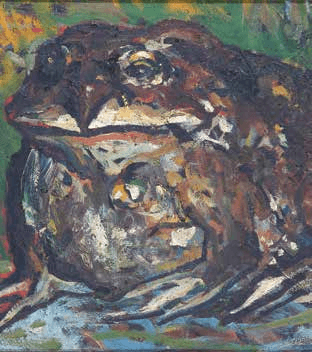
A selection of Lee Cheng Yong’s artworks, including two oil paintings entitled Lucky Toad (circa 1950s; 30cm by 42cm) and Landscape (Banana Tree) — dated 1952 and measuring 44.5cm by 59.5cm — are estimated at between RM15,000 and RM25,000.

A bust sculpture of a man — believed to portray Lee Cheng Yong’s father — made of plaster of Paris,will also be going under the hammer.It is estimated at RM5,000 to RM8,000.According to the current owner, the sculpture is one of a pair — the other, perhaps, depicts the artist’s mother and is said to be in the collection of an institution.

Batik painting

Known as the “father of batik painting”,Datuk Chuah Thean Teng (1914-2008) first incorporated the technique into his artistic endeavours after World War Two, when the batik factory he was operating closed down. On offer at The Edge Auction is a romantic artwork entitled Kampung Scene (circa 1960s; 87.5cm by 59.5cm). It is estimated at RM30,000 to RM40,000.

Estimated at RM10,000 to RM15,000, Chia Yu Chian’s Bukit Tinggi oil on canvas (1972, 45cm by 32cm) comes from a private collection in Penang
Khoo Sui Hoe’s Over the Red River oil on canvas work laid on board (1990, 89cm by 101cm) has an auction estimate between RM35,000 and RM45,000
Lee Cheng Yong’s Lucky Toad oil on canvas painting (circa 1950s, 30cm by 42cm) has an estimated price of RM15,000 to RM25,000
Ismail Mat Hussin’s Farming batik work (circa 2000s, 71cm by 71cm) has an estimated price of between RM15,000 and RM18,000

His grandson, Chuah Seong Hooi, 43, is continuing his legacy.The eldest son of Chuah Siew Teng, Seong Hooi painted Mother and Son, dated 2011 and measuring 85cm by 59.5cm. It is estimated at RM15,000 to RM19,000.

Patrick Ng Kah Onn (1932-1989) first attracted attention when his Batek Malaya, dated 1957,which illustrates a group of Malay womenfolk hanging their sarongs on a wash line,was awarded first prize at the First Southeast Asian Art Conference and Competition 1957 in Manila. On offer at the sale is a mixed media on fabric executed by him in batik technique, entitled Nude Female (circa 1960s; 42cm by 90cm). It is estimated at RM28,000 to RM30,000.

Another batik artist who championed the dry brush and pointillism technique is Toya Lim Khoon Hock, 74. Sunrise (2005; 63.5cm by 102cm) and Gathering (2006; 104cm by 51cm) — two batik paintings mounted on silk scroll — are priced between RM24,000 and RM26,000.

Born in Singapore in 1939 and raised in Terengganu,Seah Kim Joo is recognised for the use of the dye-and-resist batik technique. He won the first prize for two consecutive years at the Malayan Federation Open Art Competition. On offer is an abstract batik work by him entitled Disintegration (circa 1980s; 58cm by 43cm) that is estimated at RM3,500 to RM5,000.

Datuk Tay Mo Leong,79,learnt the wax-fixing technique in Japan and created a breakthrough in the traditional method of “double dye”.He is also known for his Balinese-inspired artwork, one of which is on offer. Entitled Offering Girl, the batik painting (2005; 91cm by 60cm) is estimated at RM8,000 to RM10,000.

A unique batik painting by Ismail Mat Hussin (1938-2015) entitled Farming (circa 2000s; 71cm by 71cm) is estimated at RM15,000 to RM18,000.

Link to pdf

Collecting Southeast Asian Art

The consumption of transnational culture has become an appeal in post-modern society. How and why does one collect regional works of art?

In Southeast Asia, cross-cultural works of art have been circulated regionally and internationally since the mid-1980s and throughout the nineties. It started with the “boom” in Indonesia and the Philippines’ art markets; Malaysia and Singapore’s economic growth; Vietnam’s Đoi Moi reform period; and Thailand’s flourishing commercial art galleries in the mid-nineties,until the Asian financial crisis hit in 1997.

Malaysian art collectors have expanded and diversified their portfolio to include Southeast Asian works of art due to close cultural connection, historical significance and,perhaps, for lucrative investment returns.

At the forefront of Asia’s art market today is Hong Kong, since the inception of Art HK in 2008 until its merger with Art Basel — the organiser of art fairs in Basel and Miami — inaugurating Asia’s first edition in Hong Kong that took place in May 2013.The art fair showcases the best of Eastern and Western art.

In 2011,Art Stage was established in Singapore, focusing on contemporary Asian art and was first held at Marina Bay Sands’ Sands Expo & Convention Centre. It is now into its seventh edition (Art Stage Singapore 2017 will take place from Jan 12 to 15 at the centre),with a branch installed in Jakarta last August, elevating the status of the Art Stage brand into Southeast Asia’s boutique commercial art fair.

Other art fairs in the region include Art Jog in Jogjakarta, Art Fair Philippines in Manila, Art Expo in KualaLumpur,andAffordableArtFair in Singapore. But one of the oldest fairs of Asian contemporary art is the Asia Pacific Triennial of Contemporary Art (APT) at the Queensland Art Gallery in Brisbane. It showcases contemporary art series, which started in 1993.According to its website, “the APT series has drawn more than three million visitors with its unique mix of visual spectacle and cross-cultural insight” for more than two decades. Although the triennial fair is mainly educational rather than commercial, it is a significant occasion for the participating artists representing their respective countries to increase their professional artistic merits, just like the world’s most prestigious Venice Biennale, which was founded in 1895.

Other important biennales (biennials) and triennials in Asia are the Taipei Biennial (founded in 1992), Gwangju Biennale (founded in 1995), Shanghai Biennale (founded in 1996), Yokohama Triennale (founded in 2001),and Singapore Biennale (founded in 2006).

Auctions

Ever since the world’s two main auction houses — Christie’s and Sotheby’s — relocated their sales of Southeast Asian arts from Singapore to Hong Kong in 2002 and 2008 respectively, the gap in the market has been filled by local regional auction houses such as Borobudur Auction, 33 Auction, The Edge Auction, and Henry Butcher Art Auctioneers.

In the fifth edition of The Edge Auction on March 5, an exciting range of modern and contemporary Southeast Asian art will be featured. Representing Indonesia are the likes of John van der Sterren,78; Josephine Linggar, 73; Heri Dono, 56; Ugy Sugiarto, 48; Hudi Alfa,47; Agus “Baqul” Purnomo, 41; Riki Antoni, 39; I Dewa Ngakan Made Ardana, 36; Hendra ‘Blankon’ Priyadhani, 35; Saman and Hardi Marsono. And from Vietnam are Hong Viet Dung, 54, and Phuong Quoc Tri, 40, who will be offering artworks for the first time.

The appeal of Indonesian art stems from cultural and historical values,where artistic expressions are influenced by the people and natural landscape of the archipelago, external exposure to China, the Middle East and Europe, and contemporary social and political climate. Most of the modern Indonesian artworks contain elements of romanticism as pioneered by Raden Saleh, the 19th-century Arab-Javanese painter renowned for his romantic-naturalistic works during the Dutch East Indies period in Indonesia.

A popular genre called “Mooi Indie” (Dutch for beautiful Indies) was developed during colonial Dutch East Indies, depicting the quixotic scenes of the colonial Indies. Echoing the style of his ancestors, John van der Sterren, who was born in Sukabumi,West Java,in 1938 created an Impressionist-style landscape oil painting on canvas circa 1990s, measuring 60cm by 70cm. Priced at about RM13,000 to RM17,000, this work will make its debut at The Edge Auction in March.

Another work that captures the nostalgic scene of yesteryear is award-winning Hudi Alfa’s oil painting Old Batavia II. Painted in 2015 and measuring 60cm by 80cm, the monochromatic streetscape of Jakarta pre-1949 carries a price tag

of about RM6,000 to RM8,000. An illustrator by profession before becoming a painter, Hudi Alfa is also known for his figurative paintings as represented in two other works on offer: Winner Takes All (dated 2006), measuring 130cm by 93cm, and featuring a cockfight scene, and Three Dancers (2015), measuring 80cm by 100cm. Both oil on canvas works are priced at RM6,000 to RM8,000.

Vietnamese artist Hong Viet Dung’s Summer Morning (dated 2011) will make its debut at The Edge Auction, priced at RM30,000 to RM50,000

In the contemporary segment, collectors will have an opportunity to acquire an abstract expressionist work on canvas by Agus “Baqul” Purnomo,Twilight #2. Painted in 2013 and measuring 200cm by 180cm, this vibrant painting depicts “random numeric sequencings that collide with colour and brushstroke to create a rich and dynamic tapestry of various skies throughout the day”,according to the text written by curator Eva McGovern for Agus’ solo exhibition, Numbers in the Sky,held during Jogja Contemporary at Sangkring Art Space in 2012.By using purple hues as a base and yellow to accentuate the roman numerals on the foreground, the effervescent aesthetics of Twilight #2 is priced at RM7,000 to RM10,000.

A member of the Ace House Collective, an artist collective based in Jogjakarta, Hendra “Blankon” Priyadhani is a contemporary visual artist who incorporates found objects from flea markets in his two or three-dimensional mixed-media works. On offer is a quartet of wall sculptures Re-United of Post Power Syndrome created from 2014 to 2016 and priced at RM1,300 to RM2,600 each.

Similar to Indonesian art, Vietnamese art had evolved since the beginning of the 19th century when French artistic influence spread into Vietnam. In the early 20th century, the École Supérieure des Beaux Arts de l’Indochine (Indochina College of Arts) was established to educate students on European artistic methods. The college exercised its influence mostly in Hanoi and Saigon.

A graduate of the Hanoi Industrial College of Fine Art in 1984, Hong Viet Dung has exhibited his works in countries like Russia, Germany, Singapore, Japan, Hong Kong, Norway, the US,Australia and the UK.A devout Buddhist, Hong’s works capture the calmness and serenity of nature. Up for sale at the upcoming auction is Summer Morning (dated 2011). The yellow landscape, measuring 135cm by 155cm, depicts the soft silhouette of a mangrove forest by the river and a solitary boat. It is tagged at RM30,000 to RM50,000.The current owner acquired the oil painting from an art gallery in Hong Kong.

Another Vietnamese work on offer is a portrait of a young woman by Phuong Quoc Tri, whose main themes include women from the minority tribes,nudes and women in traditional ao dai dresses. Measuring 130cm by 110cm, Highland Lady (dated 2011) depicts the beauty of a Degar woman.Also known as Montagnard, the Degar are indigenous people of the Central Highlands of Vietnam. Executed on a large scale but with minimal palette, the artwork is estimated to be sold at RM15,000 to RM20,000 at the auction.

Link to pdf

Top-Grossing Malaysian Artists

How are Malaysian artists ranked? The Edge Galerie has compiled a list of their artworks that have exceeded the RM100,000 mark at auctions and private galleries.

The information was gathered from selected auction houses and private galleries.All auction prices include a buyer’s premium. The conversion rates listed are based on the date of sale. Some gallery owners have declined to declare and publish their record prices.

Leading figures

At the top of the list is the late Datuk Ibrahim Hussein, whose Red, Orange & Core, 1984, (198.3cm by 271.4cm), was sold at Henry Butcher Art Auctioneers in 2012 for RM797,500, which included a buyer’s premium of 10%.

Although sold below the “RM800,000 to RM1,200,000” estimate, the price realised remains the highest ever sold for a Malaysian artwork at an auction.This perhaps reflects the condition of the secondary art market, which has been affected by the deluge of auction houses entering the market in 2013, resulting in limited sources of “high quality” artworks; consignors preferring to sell privately instead of through auction; global economic insta- bility; and the weakening ringgit.

However, Malaysians have continued to splurge on artworks, albeit prudently, at galleries, art fairs and auctions.

Latiff Mohidin, 75, comes second with a piece from his latest series, Seascape, 2013, (166cm by 110.5cm). It fetched RM572,000 at The Edge Auction in 2014.

In November 2015, Christie’s auction, Convergences: A Special Sale of Singapore Art, featured Malaysian artists such as Tay Chee Toh and Chia Yu Chian (1936 – 1991). The late Chia’s By the River, 1954 (65cm by 80cm) was sold for HK$687,500 (RM378,751), a record price for the artist,whose paintings depicted the Nanyang style.

Although prices at auction do not necessarily reflect the importance of the artists or the true value of their artworks, it is an avenue for the public to obtain transparency in the art market, to a certain extent.

Private sales

The Edge Galerie’s exhibition, Latiff Mohidin: Modern Sculptures 2007 – 2015, in April this year showcased 31 sculptures made from stainless steel,resin and brass. The largest stainless steel work, Shiraz 2 (127cm in height by 248cm in length by 46cm in width) was sold forRM640,000,includingGoodsandServicesTax(GST).

Contemporary artist Ivan Lam, 41, created a trilogy of paintings for an exhibition entitled Day Zero, Night Hero at Wei-Ling Gallery in 2013. The first two pieces — Day – I have hated you too much to be grateful of the Day and Night – I have loved you too much to be fearful of the Night — were first exhibited at Art Basel Hong Kong in May 2013.The final work, Hero/Zero, was completed in November 2013. In 2015, the series was sold for RM250,000.

In 2014, Wei-Ling Gallery sold a mixed-media installation artwork by Anurendra Jegadeva, 51, for RM330,000. The piece was from his solo exhibition entitled MA-NA-VA-REH – Love and Loss in the Time of the Big Debate.

In the same year, NN Gallery sold an abstract painting by Cheong Laitong, 84, entitled No 29, 1995 (135cm by 175cm) for RM100,000.

Without doubt, many other artworks may have been sold privately at higher prices. As money is a delicate subject for most high-net-worth individuals, discretion is key when it comes to buying and selling art. Most art dealers adopt the “client confidentiality” principle, therefore the prices are usually only known to the privileged few.

Contemporary artists

Favourite artists in the Malaysian contemporary segment at auctions include Chang Fee Ming,Awang Damit,Ahmad Zakii Anwar,Jalaini Abu Hassan,Bayu Utomo Radjikin, Rafiee Ghani and Kow Leong Kiang.

At an auction in Singapore in 2013, Larasati Auctioneers sold a watercolour on paper by Chang entitled Mandalay for SG$103,700 (RM255,924), an auction record for the artist to date.

In June last year, Chang presented over 70 artworks at a Christie’s Private Sales exhibition in Hong Kong entitled Chang Fee Ming: Weaving the World in Watercolour. His paintings sold for over RM200,000 each.

In May 2015, Awang Damit’s diptych entitled Apa Khabar Ledang (Essence of Culture series) dated 1992 was featured at Christie’s Hong Kong. It was sold for HK$437,500 (RM206,430),breaking the artist’s previous auction record of RM100,800 for a 1993 artwork from the same series achieved at Henry Butcher Art Auctioneers in November 2014. At the Hong Kong sale, those present revelled in the bidding spectacle as the final price was 672% above the lower estimate of RM15,000.

Since the Southeast Asian Modern and Contemporary Art sale by Christie’s in Hong Kong in 2007, Ahmad Zakii Anwar’s artworks have been steadily fetching higher prices. Angkor 2, 2006, (66cm by 198cm) was sold for HK$427,500 (RM184,638), an auction record for the artist.

His previous record price of RM115,500 was achieved for an acrylic on jute painting entitled Oleg, 2013, (120cm by 180cm) at The Edge Auction in 2013.

At the same Christie’s auction in 2007 in Hong Kong, Jalaini Abu Hassan’s Halal, 2007, was sold for HK$391,500 (RM169,090), also an auction record for the artist. Locally, his highest auction price of RM121,000 was achieved at The Edge Auction in 2013 for a diptych mixed media on canvas entitled The Hallucination of Facts in Ungrounded History, 2012 (244cm by 305cm).

Established names

Another sought-after name at auction is Khalil Ibrahim, 82, whose 1993 multi-coloured abstract painting from his Fishermen Series was sold for RM107,084 at the Henry Butcher Art Auctioneers’ sale in October 2015.

Other artists whose works have performed well at auctions include Khoo Sui Hoe, 77, whose dreamy painting, Around the Moon, 1972 (88cm by 88cm) was sold for RM93,500 in 2013; Chong Siew Ying, whose oil on canvas work, L’ete, 2006 (150cm by 150cm) was sold for RM89,600 in 2014; and Lee Cheng Yong, whose oil on board painting, Rubber Collection, created in the 1960s and measuring 60cm by 50cm, was sold in 2015 for RM80,640.

Across the causeway, works of modern artists such as Chen Wen Hsi, Georgette Chen and Cheong Soo Pieng have surpassed the RM1 million mark at auctions. For instance, at Sotheby’s Hong Kong 40th Anniversary Evening Sale in 2013,Wen Hsi’s oil on board painting entitled Pasar (Market), circa 1950s, was sold for HK$13,240,000 (RM5,429,167). At the same auction, Georgette’s oil on canvas painting, Lotus Symphony, 1962, (58cm by 144cm) achieved HK$9,160,000 (RM3,756,131).

More recently, at last year’s Christie’s Convergences: A Special Sale of Singapore Art in Hong Kong, Cheong’s oil on canvas painting, Balinese Dance, 1953 (134cm by 87.5cm) was sold for HK$7,720,000 (RM4,250,601).

In Malaysia, artworks that could possibly exceed RM500,000 and reach RM1 million are those sold privately as well as commissioned pieces such as public sculptures. Latiff Mohidin, Datuk Syed Ahmad Jamal,Yusof Ghani,Abdul Multhalib Musa and Eng Tay have created public sculptures for conglomerates.

Contemporary artists who may have also sold artworks for more than RM100,000 include Ahmad Fuad Osman, Bayu Utomo Radjikin, Hamir Soib and Nadiah Bamadhaj.

“Value” in the art market is as complex and mysterious as an abstract painting. To understand it, one has to experience the entire journey of looking at art beyond the price tags.

Link to pdf

Buying Smart at Auction

Major works sold at auction by top artists can and invariably do offer a better deal than at private sales. While incredible records are sometimes achieved in auctions for the biggest names in the international art market, for the rest of the field, the benchmark prices are more modest. In this second and final article on art auction bidding, we offer an insight of what to expect.

Major works by top Malaysian artists such as Datuk Ibrahim Hussein and Latiff Mohidin generally hover in the RM300,000 to RM500,000 range at local as well as international auctions.

In the Asian 20th Century Art auction by Christie’s Hong Kong on Nov 27, Ibrahim’s oil on canvas painting, Embracing, which had a presale estimate of HK$400,000 to HK$600,000, eventually sold for HK$687,500 (RM394,531), including the buyer’s premium. Dated 2001 and sourced from Germany, the 126cm by 126cm artwork depicts a nude couple in the act of embracing, executed in Ibrahim’s hallmark lines and in blue palette. That auction was part of the Autumn sale series from Nov 25 to 30 in celebration of Christie’s 250th anniversary. Overall, the sales totalled RM60 million (HK$104,725,000), including the buyer’s premium.

As a comparison, top modernist Latiff Mohidin’s oil on canvas Debris 1968 (89cm by 69.5cm) sold for RM330,741.96 (HK$575,000 with the buyer’s premium) at Sotheby’s Modern & Contemporary Southeast Asian Art on Oct 5, 2015. It had a presale estimate of HK$400,000 to HK$600,000 (RM230,000 to RM345,000). Subsequently, the same painting was offered at another auction in Kuala Lumpur in April this year with an estimate of RM420,000 to RM550,000. The painting sold for RM541,056,including the buyer’s premium.

Auction houses provide collectors the opportunity to buy artworks kept in private collections for years. In our previous article,we covered the preliminary steps to adopt before buying at auction, such as identifying the type of art desired, gaining better knowledge of such works, determining a budget and attending the preview. Now, we will delve into how to acquire an artwork at auction and understanding auction etiquette.

Ways to bid

Traditionally, the general public is physically present to attend and bid at auction. This is the best way to experience the excitement of bidding. By being there, bidders will not only be enthralled by the energy in the salesroom, but also gain insights from fellow attendees.

Auction-goers comprise seasoned and new collectors, art enthusiasts, gallerists, dealers and curious individuals.For many, auctions are merely social events but for some, it is an opportunity to keep track of the art market — to be in the know about hammer prices and bidders as well as the buyers of certain artworks.

Alternatively, for the convenience of those who wish to place their bids on an artwork or two but are unable to attend due to travel or prior engagements, auction houses provide other methods to submit their bids — by telephone or absentee.These options are also being used by bidders who wish to bid anonymously.

For telephone bids, an agent will be assigned to represent a bidder.The agent — a mediator for both auctioneer and bidder will provide a live description of the lot, informing the bidder exactly how much the bids are on the floor and to encourage prospective buyers to place a bid.

Because the auction is happening in real time, telephone bidders are at a disadvantage.Among the risks are dropped calls,poor reception or delayed communication due to long-distance calls or even language barriers.

Absentee bids are usually placed by those who are unable to be there in person or take telephone calls. Bidders with a strict budget also prefer to use this facility.

With the advent of eBay,auction houses have incorporated live online bidding into their sales through collaborations with online platforms such as Invaluable, Paddle8,Artnet,Auctionata or Artsy.This mode of bidding mainly attracts clients abroad as well as a younger audience. Live online bidding is also ideal for those who want to participate in the comfort of their home,primarily because of different time zones. However, this privilege comes with a surcharge. The online platforms will charge an additional percentage as commission, for example 5%, on top of the buyer’s premium charged by the auction house.

Auction day

Bidding increments vary among auctioneers but generally, increments will differ according to a set of price brackets. For instance, artworks ranging from RM1,000 to RM4,999 are increased by RM100; RM5,000 to RM9,999 by RM200; RM10,000 to RM24,999 by RM500; RM25,000 to RM49,999 by RM1,000; RM50,000 to RM99,999 by RM2,500; RM100,000 to RM199,999 by RM5,000; RM200,000 to RM499,999 by RM10,000; RM500,000 to RM999,999 by RM25,000 and so on.

Auction etiquette that needs to be observed include ensuring paddles are raised high enough for the auctioneer to see and accept a bid; refraining from slowing down the auction by “cutting the bid”; and taking too long to decide whether or not to place a higher bid.

Bid spotters are deployed in the salesroom to ensure that no buyer goes unnoticed.They stand to the side of the rostrum as well as in the aisles and constantly scan the room.

In Malaysia, the normal speed for an auctioneer is 30 to 40 lots per hour,but in Europe and America, an auctioneer may complete 60 to 100 lots per hour.

Datuk Ibrahim Hussein’s Embracing (2001) sold for RM394,531 at Christie’s Hong Kong recently

Winning a bid

The indication that a bid has been successfully won is when the auctioneer hammers the rostrum and announces “sold”.The auctioneer will then ask to see the bidder’s paddle number and write it down in his or her catalogue.

Moments later, an auction house employee will approach the bidder with an acknowledgement form and an invoice. It is the norm for the bidder to immediately sign the form and make payment for the lot sold.

For those who have won through telephone or as an absentee, the auction house will notify them in writing and make arrangements for payment within a certain period.As for online bidding,the amount will be charged directly to the bidder’s credit card as required during registration.

Underbidder

The role of an underbidder is important at auction in the sense that his or her final bid will determine the hammer price of an artwork as well as the buyer. In the event that the reserve price is not met during auction, the auction house may contact the final bidder and underbidders to sell an artwork in a post-auction sale at a price agreeable to both buyer and seller.

Finally, it is important to learn the auction glossary and terms of sales, which are normally published in an auction catalogue.

Link to pdf

Bidding for Art

Buying desirable artworks at auctions should not be left to chance. This first of a two-part article offers some tips on how to bid at auctions, locally and internationally.

With many private collections being put up for sale at auctions — most recently, the three-part auction of the David Bowie collection at Sotheby’s London on Nov 10 and 11, which recorded sales of RM180.8 million (£32.9 million) — auction houses are one of the best places to consider when purchasing art, besides galleries and fairs.

The leading artwork in the Bowie sale was Jean-Michel Basquiat’s Air Power (estimate: £2.5 million to £3.5 million), which fetched £7.093 million. Other works included Frank Auerbach’s Head of Gerda Boehm (estimate: £300,000 to £500,000), which was sold for a staggering £3.789 million, and Damien Hirst’s piece done in collaboration with Bowie, entitled Beautiful, Hallo, Space-Boy Painting (estimate: £250,000 to £350,000), which raised £785,000.

The results consist of hammer price with buyer’s premium.

Before even attending an art auction or raising your paddle to bid for a desired work, there are certain considerations to be taken into account.

Identify
First and foremost, one needs to determine the purpose of owning an artwork. Is the artwork for emotional enrichment and visual stimulation? Or is it for decorating a new home or office, a gift for someone or investment?

Secondly, what type of artwork is suitable? Do you prefer Malaysian, Southeast Asian or European themes; modern or contemporary; sculpture or painting; abstract or still-life; landscape or figurative; monochromatic or multicoloured; photography or print; batik art or Chinese ink; watercolour, charcoal or oil; on paper or canvas? And so forth.

By identifying the purpose first, it will ease the process of looking for the right artworks at auctions.

Knowledge
Now that the types of artworks have been narrowed down, one is ready to subscribe to online art platforms. There is a sea of information on the web — a good place to start would be Artnet.com, which focuses on global art politics and economics.

Locally, The Edge Galerie’s website lists art events in Malaysia and Southeast Asia. It also offers free data on what Malaysian artists and foreign artists based here have achieved at local and regional auctions.

Once the local art scene has been explored, the names of established or popular artists and their works will soon become familiar. This may come in handy later when you enter the saleroom. It is also important to chat with gallerists to stay informed of developments.

The annual calendar of art events in the region usually begins with Art Stage Singapore, followed by auctions in Malaysia and Singapore, Art Basel Hong Kong and auctions held in conjunction with the fair. Art Jog in Yogyakarta, Indonesia, is typically held in the middle of the year whereas Art Expo in Malaysia and several auctions in Malaysia and Hong Kong are scheduled for the end of the year. Throughout the year, art galleries will regularly hold exhibitions.

Budget
After the stimulating reconnaissance at art events, one would have an idea of the types of artworks that meet one’s desire and budget. Indicative prices for works by young and emerging artists range from hundreds of ringgit to RM5,000; young contemporary artists, from RM6,000 to RM20,000; mid-career artists, from RM30,000 to RM100,000; and living senior artists and pioneer or deceased artists, from RM50,000 to RM700,000.

The prices, however, are a general guide and may not apply at every instance.

Factors that influence the prices of artworks include the medium, year, dimension, condition, provenance and whether they are signed.

For instance, an artwork by a venerable name may not necessarily be more expensive than a contemporary one. An undated watercolour on paper by Malaysian pioneer artist Abdullah Ariff (1904-1960), entitled The River Ferry, was sold at a local auction for RM46,200 in 2013. In the same auction, contemporary artist Chang Fee Ming’s watercolour on paper, entitled At Dusk … Nanyang, dated 2012, was sold for RM198,000.

Also, do keep in mind the additional charges at auctions. The hammer price is not the final price to pay. Other costs to consider are the buyer’s premium, Goods and Services Tax and artwork logistics.

The buyer’s premium is a commission on top of the hammer price (winning bid at auction) of the lot that must be paid by the winner. It is charged by the auctioneer to cover administrative expenses. The buyer’s premium goes directly to the auction house and not to the seller.

Once you have determined your budget, which includes all expenses, you are ready to go window shopping.

Preview
Auction houses usually organise exhibition previews before the auction day to encourage potential buyers to view and inspect the works, known as lots, up close. It is during these previews that the lots sourced from private collections are displayed to the public, mostly for the first time.

The general public can admire and enquire further during this limited time before the lots find a new home. Potential bidders are encouraged to enquire about an artwork’s provenance, request condition reports and find out if it comes with a certificate of authenticity. Though such certificates are not provided most of the time, it should not be a deterrent to acquire good works.

In our next article, readers will find out the different ways to bid, what happens on auction day, when a bid is won and the ramifications of being an under-bidder.

This article was originally published by The Edge Communications Sdn Bhd in November, 2016.

Link to pdf

Artworks at Auction

How are the pieces selected, and what do the auction houses look for?

The secondary art market has gained popularity since the establishment of the first auction house focusing on Malaysian art in 2010. Three years later, three more art auction houses were set up, encouraging some competition within the ecosystem. Also, since then, smaller art auctions have been held in conjunction with philanthropic endeavours.

In 2015, the advent of a fifth auction house sent shockwaves through the Malaysian art fraternity. Asian Ace Art Auction not only featured Malaysian art, but also purported original works by Vincent van Gogh, Claude Monet and Pablo Picasso priced from RM10,000 to an astounding RM10 million.

Unfortunately, the auction house, which is supported by a certain “New York Modern Art Gallery”, was short-lived after the demise of its founder the day after the auction weekend. According to the statistics gathered by Rogue Art for the third volume of Narratives in Malaysian Art published this year, sales of artworks at auction in Malaysia have increased from 63 lots in 2010 to nearly 1,200 lots in 2014.

The Edge Auction has offered 402 Malaysian and Southeast Asian artworks since 2013. How are the artworks selected, and what do the auction houses look for? This is a basic guideline to give readers an idea of what to expect at an auction and the list is by no means exhaustive.

Brand
Like any luxury commodity, an artist’s commercial success is measured by popularity. Think Damien Hirst, Ai Wei, Yayoi Kusama, Andy Warhol, Pablo Picasso, and so on.

Locally, there are a number of artists whose artworks are sought by collectors. These artists are categorised by seniority — pioneer, modern, established, mid-career, young and emerging.

Within these segments, price brackets are identified through sales in the primary market as well as by desirability. The secondary market aims to offer works that are rarely found in the primary market, thus works by modern masters such as Datuk Chuah Thean Teng, Lee Cheng Yong, Datuk Syed Ahmad Jamal and Datuk Ibrahim Hussein may gain serious attention.

Rarity
Seasoned collectors like the fact that they will own an artwork that no one else has. Some artworks that are derived from a specific period of the artist’s career can also influence the price tag. For instance, Latiff Mohidin’s series — Pre-Berlin (1951-1959), Berlin (1960–1964) and Pago-Pago (1960–1969) — particularly works on canvas, are highly sought-after. These works are considered “blue chips” by many collectors, including institutions, because of their rarity and historical significance. Other factors that contribute to the demand and pricing of an artwork are its subject matter, colour palette and condition.

An artist may also produce a series of oil paintings, sculptures, sketches, digital prints, lithographs and prints but a mono print or an artist’s print may fetch a higher price than a print in an edition of 500.

Provenance
An artwork that has been exhibited either in a solo or group show or at reputable international art fair may fetch a higher price at auction. So may artworks illustrated in a catalogue, preferably on the front cover, or that have been accorded an award. An artwork from the collection of a prominent individual or institution is also popular.

Among others
In this section, “filler” artworks comprise works that have been sold in aftermarkets in countries such as Hong Kong, Singapore or Jakarta. These artworks by regional artists are usually contemporary and colourful, and priced low to attract a younger audience. The artists in this segment are mostly new, upcoming or making a debut at a Malaysian auction. Their appearance at auctions serves as an introduction to new collectors or young investors.

This article was originally published by The Edge Communications Sdn Bhd in November, 2016.

Link to pdf

The Indelible Mahathir Factor

With a provocative exhibition title like Era Mahathir, given the present political climate, the curators at Ilham Gallery have a tall order to fill. The verdict is open as to whether they have succeeded.

“All the exhibitions at Ilham are decided by the curatorial team, and while the owners are consulted on our overall programmes, they have never interfered in curatorial decisions,” says Ilham gallery creative director Valentine Willie.

He dismissed the notion that Ilham Gallery owners, Tun Daim Zainuddin and his wife Naimah Khalid, had influenced the way the current exhibition, Era Mahathir, was put together. The finance minister in Tun Dr Mahathir Mohamad’s Cabinet, Daim, 78, was perceived by certain quarters as having had a hand in how Dr Mahathir was to be portrayed or even “glorified” in the exhibition.

Housed in Ilham Baru Tower in Jalan Binjai, Kuala Lumpur, the exhibition brings together 48 artworks by 28 Malaysian artists, including an art centre, to illustrate the political and social climate during the administration of Malaysia’s fourth prime minister between 1981 and 2003, who is now 91 years of age. The artworks on display are mostly loaned by institutions, private collectors and artists.

The works are by such artists as Datuk Syed Ahmad Jamal (1929-2011); Ismail Zain (1930-1991); Kok Yew Puah (1947-1999); Nirmala Dutt, 75; Datuk Mohd Nor Khalid (Lat), 65; Juhari Said, 55; Zulkifli Yusoff, 54; Anurendra Jegadeva, 52; Tan Chin Kuan, 50; Bayu Utomo Radjikin, 47; Ahmad Fuad Osman, 47; Nur Hanim Khairuddin, 47; Kow Leong Kiang, 46; Noor Azizan Rahman Paiman, 46; Yee I-Lann, 45; Chuah Chong Yong, 44; Roslisham Ismail (Ise), 44; Chang Yoong Chia, 41; Mohd Azlan Mohd Latib, 42; Phuan Thai Meng, 42; Abdul Multhalib Musa, 40; Vincent Leong, 37; Rahman Roslan, 31. Other artists are Jo Kukathas, Hamidah Abdul Rahman, Kenneth Chan, Liew Kung Yu and Five Arts Centre.

Since Ilham Gallery’s inception last year, Era Mahathir is the third exhibition and, according to the gallery’s website, it relates to “a transformative period for the visual arts in Malaysia, a period that saw the re-emergence of the figurative in producing socially relevant art”.

Visitors are greeted with a biographical documentary on the former prime minister, produced by A&E Networks and aired on History Channel in 2009. A series of caricatures, first published from the 1980s to the 2000s by cartoonist Datuk Mohd Nor Khalid, popularly known as Lat, is displayed opposite the television screen.

“The show, which was planned about two years ago, is intended to showcase the artistic responses to the policies and politics of Era Mahathir, primarily contemporaneous artworks, and some in hindsight,” Willie says.

“Because the premise of the show is artistic responses to the policies and politics of Dr Mahathir, we felt that this title would be an accurate reflection of what the show is trying to showcase.”

Superstructures
An indelible mark left by Dr Mahathir are the soaring twin skyscrapers — the Petronas Twin Towers — completed in 1996. The building is named after Petroliam Nasional Bhd, which was established in 1974. The towers symbolise Malaysia’s economic transformation.

An obvious choice for subject matter, among the artists who have reflected on the architectural landmark in the exhibition are Liew Kung Yu, Yee I-Lann, Chang Yoong Chia and Vincent Leong.

“As an internationally recognised landmark, the Petronas Twin Towers symbolise the courage, ingenuity, initiative, determination, energy, confidence, optimism, advancement and zest of a nation,” says the towers’ website, with the statement attributed to Dr Mahathir.

In Era Mahathir, various interpretations of the theme are represented, from Liew’s kitsch interactive installation titled Pasti Boleh (Sure Can One), created in 1997, to Chang’s elaborate collage made entirely of postage and revenue stamps, titled The Dollar Sign (2014), measuring 211cm by 134cm.

It is also worth noting that the artworks showcased “extend” the period of Dr Mahathir’s “supremacy” even until 2016.

“For better or worse, the policies and politics of Dr Mahathir continue to have an impact on Malaysia today. The man himself remains in the news and continues to loom large. We have always tried to use our small galleries on level three to commission new works as we did in our inaugural show, Picturing the Nation. The three new works on level three of Ilham, commissioned for Era Mahathir, show how the man and his policies continue to seize our collective imagination,” Willie says.

The works comprise Mohd Azlan Mohd Latib’s series of 55 photo-collages and installation titled Wayang: Proparism (2010-2016), Kenneth Chan’s 91 postcard-sized digital prints titled #DrMLovesU (2014-2016) and a commissioned piece of video art by Rahman Roslan titled Testimonial (2016).

Fashioning corsages
In the main gallery on level five, a section displaying video works by the Five Arts Centre, titled Skin Trilogy (1995), and Jo Kukathas’ — co-founder and artistic director of The Instant Café Theatre Company — work titled Ybeeee (2013) are screened side by side.

Kukathas’ work, a satirical play about a Malaysian politician dressed in a bush jacket with a name tag that reads “YB”, acronym for Yang Berhormat (The Honourable) and an elaborate corsage — the standard get-up for politicians during Dr Mahathir’s time — presents a sardonic take on what usually appears on the national news, like a ribbon-cutting ceremony or a public speech.

Hung on the wall opposite is a woodcut on paper by Juhari Said, titled Bertuankan Beruk (Portrait with Corsage) created in 1999. Measuring 120cm by 84cm, the monochromatic work depicts the profile of a gorilla that dominates the picture, leaving little white space. The printmaker marks the portrait with a splash of colour, which accentuates the corsage attached to the primate’s left chest.

Another artist came to mind when I saw the significance of the corsage. Yee I-Lann has also produced a series of photographic images depicting the corsage in a variety of arrangements, titled The Orang Besar Series: YB#1–10 (2010). These corsages were worn by Malaysian politicians and dignitaries when they attended official functions held in their honour.

Last year, Prime Minister Najib Razak and his Singapore counterpart Lee Hsien Loong were seen viewing this work during the launch of Titian Budaya exhibition, where it was displayed in celebration of 50 years of friendship between Singapore and Malaysia at White Box @ Publika in Kuala Lumpur.

Social and political landscape
The Reformasi movement and its demonstrations marked the start of Dr Mahathir’s eventual decision to give up power. Among the artworks that reflect this divided period are Hamidah Abdul Rahman’s Self-Portrait and one of four larger-than-life portraits by Ahmad Fuad Osman.

Created in 1999 by Fuad, the painting titled Syhhh..! Dok Diam-Diam, Jangan Bantah. Mulut Hang Hanya Boleh Guna Untuk Cakap Yaaa Saja. Baghu Hang Boleh Join Depa… Senang La Jadi Kaya, conveys his feelings about the sociopolitical climate. That period was marked by increasing polarisation among the people — those who agreed with the views of the government regarding Datuk Seri Anwar Ibrahim’s arrest and those who opposed it.

“Hamidah’s work is the only one that deals directly with Anwar’s black eye. If you look closely, the work seems to suggest that it wasn’t just Anwar who suffered the black eye but, as Malaysians, we all did. Rather than just a single blow, the work also suggests that the black eye was a culmination of a series of soft blows. That a long series of Mahathir policies led to that infamous injury,” Willie explains.

Incidentally, Syed Ahmad Jamal’s 1999 painting — 2.9.98 — of a single eye actually documents the date of the incident.

Also featured are documentation and newspaper clippings of the installation, performance and sculptures, titled Warbox, Lalang and Killing Tools (1994), by Bayu Utomo Radjikin, Wong Hoy Cheong and Raja Shahriman as well as music performances by punk rock band Carburetor Dung at the Creative Centre, National Art Gallery, which is now the Majestic Hotel.

“Primarily, we were looking for artworks made during the Mahathir years, which addressed some of the policies and politics of the time. Frankly, there was no shortage although a number of key artworks we originally selected were not included as the artists did not wish for them to be included. And we respect their decision,” Willie says.

Lalang was presented by Wong over the course of nine days — Spraying of Weed Killer, Cutting and Burning of Lalang and Re-turfing of Lawn — in conjunction with the seventh anniversary of Operation Lalang, which occurred in 1987 as a result of internal political and institutional instability.

The performance was documented by Ray Langenbach, 68, who also conducted interviews with the audience regarding the art and sociopolitical situation in Malaysia during the exhibition opening. Langenbach declined to feature this important recording at the exhibition. He published on social media his response to the gallery upon receiving an invitation to showcase the Killing Fields-Lalang video stating that “the exhibition seems to tacitly support the notion that the Reformasi artists have now all decided to realign themselves with the Mahathir-Daim camp, despite the fact that much of their art was explicitly (or obliquely) birthed in opposition to Dr Mahathir’s corruption and draconian policies. And this supposed U-turn implies that the artists now support the continuity of non-democratic, race-based ideology that BN [Barisan Nasional] and Umno have consistently deployed in order to remain in power…”

Langenbach has lived and worked in Malaysia and has been a keen observer and participant of social realism in Southeast Asia since 1988. He is now a professor of Performance Art and Theory specialising in Live Art and Performance Studies at the Theatre Academy, University of the Arts Helsinki, Finland.

Themes of resistance
Due to the connotations associated with a title like Era Mahathir, it is understandable that some artists who felt strongly about the policies of Dr Mahathir may not want to participate for fear of being made use of and deifying his governance.

For instance, in 1999, Wong Hoy Cheong created an installation of objects found in demonstrations, titled Vitrine of Contemporary Events. It includes judges’ wigs and police batons made of cow dung, videos showing women singing a patriotic song and a copy of the Malaysian Constitution printed on paper made from vacuum-cleaner refuse. The work was created in response to the arrest of Anwar.

So, is Era Mahathir a celebration of the golden years of Malaysia and the glorification of a former prime minister, or a gathering of certain artists who at the time rebelled for a cause and have now changed their principles as they mature?

This article was originally published by The Edge Communications Sdn Bhd in November, 2016.

Link to pdf

Cultural Nomads

Galeri Petronas’ exhibition, Crossings: Pushing Boundaries, offers an ambitious theme but glaring omissions are hard to explain away or be summarily dismissed.

“It was by design that we produced the title visual of Crossings: Pushing Boundaries … to provide visual emotions to visitors when they first see the uneven typography, different dimensions and the elevation of the planes, to give a sense of edginess before they enter the gallery space,” says Galeri Petronas art collection manager Ratna Siti Akbari.

“It is a kind of ‘tactile visual’ that challenges dimension itself to create visual curiosity, to arouse the viewers’ senses and to encourage them to explore.”

The exterior of Galeri Petronas is covered with a two-dimensional sign with the title of the exhibition placed diagonally and geometric planes sculpted at various heights.

Curated by Shireen Naziree, Crossings: Pushing Boundaries, which runs until Oct 30, presents a selection of over 50 artworks by 15 Malaysian artists from three generations who have either lived abroad for a long time or are still residing outside Malaysia. The artworks were assembled from the collection of Galeri Petronas and borrowed from various private collectors, galleries and artists.

The artists, who “have embraced the changing pace of contemporary art practice within the global arena and articulated Malaysia’s diversity through their scholastic and sophisticated art practices” include; Khoo Sui Hoe, who is 77 years old; Dolly Unithan, 76; Latiff Mohidin, 75; Eng Tay, 69; Ali ‘Mabuha’ Rahamad, 64; Anuar Rashid, 58; Chang Fee Ming, 57; Nadiah Bamadhaj, 48; Bayu Utomo Radjikin, 47; Chong Siew Ying, 47; Ahmad Fuad Osman, 47; Sabri Idrus, 45; Roslisham ‘Ise’ Ismail, 44; Wong Perng Fey, 42; and Hayati Mokhtar, 47, in collaboration with filmmaker Dain Iskandar Said.

“Their works were selected for their opinions on either world or local events that have impacted our society,” says Shireen, who is a regular guest curator at the gallery.

Peace and Unity
Upon entering the space, viewers are greeted with an installation by Unithan suspended from the ceiling, titled Doves and dated 1995. The cut-outs of white doves made with acid-free paper are assembled using bamboo, fibreglass netting and nylon cord. The installation measures 45cm by 9m by 1.5m.

In her artist statement about the work, Unithan writes: “The installation comprises doves suspended from streams of netting. They are used metaphorically as symbols of universal peace. The repeated formations of the doves and dimensions of the work intensify and reinforce the projected message of peace.

“In this art display … my individual aspirations for peace, expressed metaphorically, are subsumed by a shared collective experience reflecting humanity’s yearning for universal peace and in turn engendering spiritual communion.”

Regarded as the first Malaysian woman artist to have embraced conceptual art practice as early as 1972, Unithan was educated at Hornsey College of Art, London, which was considered “avant-garde” in the 1960s within the conservative art environment of the UK.

“Her move to New York in 1976 was the start of a long international career that saw her art exhibited alongside that of Andy Warhol in a group exhibition in New York City in the late 1970s,” Shireen says.

“Her work was also selected for the Venice Biennale and she has exhibited in a number of prestigious museums in Europe and America. Her work is also in the permanent collection of the Metropolitan Museum of Art, New York. This is the first time her art has been shown in Malaysia.”

Human Displacement
“When we design an exhibition, we always look at the space as a theatre. The artworks are living characters that speak in dialogue. Visual dialogue has to be enacted here,” Ratna says. A section of the gallery is dedicated to artworks that convey the human plight, comprising a series of paintings by Ali ‘Mabuha’ Rahamad alongside an emotional work by Chong Siew Ying titled The Woman in Red Scarf, dated 2003.

For the past 40 years, Ali has travelled the globe and lived in far-flung places. In 1973, at the age of 21, he left for Europe. His wanderlust included stints in Southeast Asia, Asia-Pacific as well as the Americas. He visited Thailand, Indonesia, the Philippines, Hong Kong, India, Nepal, Pakistan, Afghanistan, Iran, Turkey, Greece, Colombia, Denmark, Sweden, Switzerland, Germany, Holland, England, Yugoslavia, France, Italy, Austria, Egypt, Luxembourg, Canada, Japan, Mexico and the US. From 1973 to 1975, he lived in Amsterdam, followed by Wasserburg in Germany from 1975 to 1984. His last base was Los Angeles, where he lived from 1986 until his return to Malaysia in 2013.

“Ali’s works, titled Nightfall and My Babies and dated 2002, have a very strong visual intensity. They provoke the audience to see the colours and the tactility of the canvases, which are almost Jackson Pollock-like,” Ratna says.

“In terms of subject matter, he draws our attention to how [people] are suffering. A subject of cruelty screaming in agony, it reminds me of Edvard Munch’s Scream with its contorted figures. [The colour scheme is] repulsive and revolting, yet they exude some form of aesthetic to me. When I look at the eyes, they are bulbous, but they are pleading. It is a visual experience, the agony of war. The artwork manifests this expression as Ali’s comment on the Gulf War.”

The message that Crossings: Pushing Boundaries intends to convey is of humanity — and the global social, cultural, political and economic conditions that affect people. Modern human history between 1960 and the millennium is chronicled by the artists and fragmented by world events.

Khoo Sui Hoe’s The Red Landscape, dated 1965, depicts a socio-political situation — the disengagement of Singapore from Malaysia. The piece also shares aesthetic similarity with Latiff’s Daun Agave dan Pago-Pago, dated 1964, with its abstract-constructivist genre. The artworks are from the collection of Galeri Petronas.

Both artists have also employed symbolism — Khoo’s depiction of a lunar eclipse and Latiff’s rendition of a solar eclipse — besides the treatment of tropical colour, shape and form that represent Southeast Asia.

“The language of art is softly spoken, in the form of semiotics. Based on Eastern philosophy, the eclipsed moon or sun spells catastrophe,” Ratna explains.

Global Warming
An impressive appearance in this exhibition is a 45-minute video by Hayati Mokhtar, in collaboration with Dain Iskandar. Titled Near Intervisible Lines and dated 2006, the work was screened at Zones of Contact, during the 15th Biennale of Sydney at the city’s Museum of Contemporary Art. It is being viewed in Malaysia for the first time.

Set in Setiu, Terengganu, Hayati highlights the rapidly changing coastline and its erosion due to global warming. It captures a panoramic view of the sandy coast that integrates almost seamlessly with the cloudy, blue sky.

Hayati studied fine art at Chelsea College of Art and Design (BA Hons) from 1995 to 1997 and obtained a master of fine arts degree from Goldsmiths College, University of London (1998/99). She utilises the moving image to examine landscapes, buildings and semi-abandoned towns. Aside from creating awareness through her art, Hayati is also the founder of Lang Tengah Turtle Watch, an organisation that focuses on the conservation of sea turtles.

Spirituality
Anuar Rashid’s epic oil painting, Jin, from his Mihraj series and dated 2011, measures 2.8m by 3.9m. At first glance, it depicts a dramatic seascape of turbulent waves in thunderous weather. But upon closer inspection, Arabic script reveals itself within the tempestuous surge of sea water.

His artistic career was spent mostly in Europe — in Yugoslavia, Montenegro, Slovakia, Italy and Southern France. During this period of “hiatus” in the 1980s, he
immersed himself in the compositions and techniques of the Old Masters.

“Each wave represents Arabic script. This painting narrates the artist’s interpretation of Surah al-Jinn, the 72nd chapter of the Holy Quran, which contains 28 verses. There is a duality within our dimension,” Ratna says.

“Anuar produced great visionary epics in Mihraj — a series of paintings that took the artist seven years to complete — engrossed in reviewing his experiences … and translating them into art. Defying explanation and meaning, his new discovery as revealed in Mihraj can be grasped, according to the artist, by means of ‘Iqraa’ or ‘reading’. He demonstrated his new understanding of myths, science fiction and sciences, which could lead to an appreciation of divinity.

“Jin is a painting on an epic scale, non-figurative and non-representational. First and foremost, it emphasises the notion of parallel dimensional reality. Anuar applied the dynamics of religious histories intertwined with popular beliefs and myths. This painting contains both literal and imaginative ideas, as the artist stresses the importance of incorporating the hidden, and vaguely inscribing on his painting certain Quranic verses. With it are many assumptions — expectations or conventions — that can and may be regulated to the understanding and meanings of contemporary life.

“His extraordinary flair for painting, the rendering of light in such a dramatic way, was particularly interesting and remarkable. This painting — executed in oil pigment and using the technique of glaze painting — is a composition of high drama, magnanimous in scale and altruistic in its aesthetic sense. It is distinctive, with the operatic and opus style of the European classical art traditions. Proof of Anuar’s virtuosity in conquering the grandeur of the European Old Masters’ painting styles, the visual emphasis with … grand narratives such as good against evil, light against dark,” Ratna explains.

Positivity and the missing link
Overall, the exhibition’s attempt to emotionally stimulate its audience by assembling a selection of visual expressions to emulate real events has proved positive. However, Crossings: Pushing Boundaries would be more impactful if the subject of migration, colonisation and identity was reflected.

To best exemplify this, Wong Hoy Cheong, whose works have been featured the world over — at the Asia-Pacific Triennial, Brisbane (1996); Fukuoka Asian Art Triennial, Japan (1999 and 2009); Venice Biennale (2003); Liverpool Biennial (2004); Guangzhou Triennial, China (2005); Asian Contemporary Art in Print, Asia Society, New York (2006); Istanbul Biennial (2007); Taipei Biennial (2008); Lyon Biennial, France (2009) — was perplexingly unrepresented.

An entire floor of the Deutsche Bank Towers in Frankfurt is devoted to Wong’s works, so the artist has certainly crossed many borders and pushed all boundaries in terms of creative output and global presence. Other artists who have practiced art abroad include Choong Kam Kow, 82, Khalil Ibrahim,82, Jolly Koh, 75, Ahmad Zakii Anwar, 61, to name a few.

In response to this observation, Shireen remarks, “The criteria for the selection of the artists were very clear. While there are numerous artists working across a variety of genres who may have exhibited abroad, we chose artists whose practices and works in the exhibition originated from their stay abroad.

“And while some of them have returned to Malaysia, others have practices that cross geographic boundaries, and others continue to have their homes elsewhere.

“Another important point in the curation was to exhibit works from the early post-Merdeka years that run parallel to Malaysia’s economic development and subsequent recognition on a global economic platform. As such, works were selected to represent three generations of post-Merdeka artists, who show a broad view of issues that have impacted not only our social thinking but also our cultural and economic and political environment.”

This article was originally published by The Edge Communications Sdn Bhd in October, 2016.

Link to pdf

Exhibition: Breathe

Exhibition: Breathe

Artist(s): Umibaizurah Mahir@Ismail, Mohd Al-Khuzairie Ali, Satoko Ootsuki

Gallery: Galeri Chandan and Patisatustudio

Year: 2016

The Clay Chemistry

“Breathe is about patience and trust that a ceramic artist as a human being shares with one another.

The exhibition is driven by the usage of the same medium: CLAY.

Clay is a life medium. Clay itself is breathing. Breathing? Yes, it is necessary for life and survival.

Clay or earth is a unique medium. It derives purely from the earth.

What makes Breathe interesting is that it brings the three of us together.

“Di mana bumi dipijak, di situ langit dijunjung”.

And clay reminds us of the Creator, Allah/God.

To respect life, beliefs and humankind.

Clay strengthens our hearts.

And clay makes us special…”

~ Umibaizurah Mahir @ Ismail

Breathe is the culmination of Patisatustudio’s 2016 initiative comprising whimsical ceramic sculptures by Japanese ceramic sculptor, Satoko Ootsuki alongside Malaysian contemporary artists and sculptors Al-Khuzairie Ali and Umibaizurah Mahir @ Ismail as a result of a two-month exchange residency programme.

Held at Galeri Chandan, Publika, Kuala Lumpur from 4 until October 23, 2016, the selling exhibition presents 20 sculptures made from clay alongside mixed media works.

Working towards a common theme of “seed”, the trio reflect on the idea of birth, fertility and nature, while taking the opportunity to gain knowledge through each other’s artistic practices and at the same time strengthening cultural bonds.
The significance of clay in Breathe is not only in the obvious choice of material, but it is also a representation of humanity.

In many beliefs particularly in Islam, it is said that Man is made from Earth. A verse in the Holy Quran stated that: “We created man (Adam) from an extract of clay (water and earth)” (Surah AlMumenoon, 23:12).

When the human body is examined today, it may be discovered that many elements presented on earth are also found in the body. Living tissues contain 95% carbon, hydrogen, oxygen, nitrogen, phosphorus and sulphur, with a total of 26 different elements.

“The theme for this show is inspired by the idea of ‘breathing together’ in the same space. For instance, the idea of three artists producing artworks from the same material, firing in the same kiln yet diverse in techniques and styles, is intriguing,” says Umibaizurah.

“Satoko’s work is feminine, its form is fine and delicate, the colours are originally pastel and sweet, like the accessories and jewelleries that she makes but it changes over time. While Khuzairie’s hybrid form comes from his imagination and science fiction in creating something exciting. My work in Breathe consists of experiential expressions and new experimental techniques.”

Patisatustudio Cultural Exchange Residency
Organised by Patisatustudio, the artists-initiative programme is fully funded by founders and hosts Umibaizurah Mahir @ Ismail and Ahmad Shukri Mohamed.

Located in a quiet suburb in Puncak Alam, Selangor, Patisatustudio was established in 2007 by the artist-couple to facilitate their soaring artistic practices and to create a platform for cultural exchange programmes for the arts community.

Patisatu, which means “uniting essence” not only serves as a studio for the couple but also as an invitational creative space for visiting artists. The non-profit initiative aims to build a network for international artists working in ceramic.

“We have been organising international artists exchange programmes since Patisatustudio’s inception. For almost a decade now, we have welcomed friends from Indonesia, Japan and Europe,” says Umibaizurah about the self-funded programme.

Through the couple’s aspiration for global presence, Umibaizurah and Ahmad Shukri have been actively attending workshops and participating in exhibitions abroad since the late 90’s.

In 2004, Umibaizurah attended a ceramic workshop organised by the International Workshop of Ceramic Art (IWCAT) in Tokoname Aichi Prefecture, Japan.

In 2009, Patisatustudio welcomed Japanese duo, Chikako Yoshikawa and Kazuko Uga for a “residency production in Patisatustudio, Malaysia” and showcased their ceramic sculptures in an exhibition entitled Tanah Timur (Eastern Soil) at Japan Foundation Kuala Lumpur.

Umibaizurah, Chikako Yoshikawa and Kazuko Uga held a group show at Azabujuban Gallery, Minato, Tokyo in 2010 following a residency programme in Tokoname, Japan. This experience ignited Patisatustudio’s residency exchange programmes in the years to come.

In 2014, Patisatustudio hosted Dutch ceramic artist Lei Hannen after Ahmad Shukri Mohamed, Umibaizurah and Al-Khuzairie Ali visited the Netherlands the year before. The residency programme concluded with an exhibition entitled Route 19 held at Pace Gallery, Petaling Jaya.

While in the Netherlands, the quartet held an exhibition entitled 5 Seasons at Norbert Dabekauussen Kunst Gallery Sittard.

Focusing on “experiential gains”, the programme is also aimed at personal attainment in an environment away for home. In July2015, the trio held an exhibition entitled Kita in Tokyo after spending some time working in Satoko’s studio named Doronco Studio in Yokohama, Japan.

In a reciprocal act, Umibaizurah welcomes Satoko to Malaysia for the first time, having met each other in a ceramic residency hosted by Chikako Yoshikawa and Kazuko Uga in Tokoname in 2010. During her two-month stay here, Satoko adapts to the way of life in Malaysia from culture, custom, food, and artistic production.

Satoko Ootsuki
A former architecture student, Satoko Ootsuki has been producing ceramic art since 2009. Satoko’s sculptures are delicate and feminine, mirroring the maker herself. The intricacy of Satoko’s work echoes her passion for jewellery-making.

Created using a mixture of bone china and porcelain, Satoko’s intricate sculptures of hybrid sea life with fruits and vegetables possesses crisp and glossy qualities.

Passing #1 and Passing #2 depicts a pair of fish coated in an assortment of vegetables, floral and seashells, a recurring motif in her body of work. Diminutive dots like ornaments are applied to create texture and as an indication of passing time.

“The dots suggest the rain. It also signifies the cycle of life like counting down the days for an egg to hatch or the birth of a new life,” explains Satoko.

“It could also indicate the repetitive cycle with regards to ceramic art making like the firing process or time taken to complete a piece of work.”

Drive features a sweet corn amalgamated with a protruding onion adorned with floral motifs and seashells.

When I first visited Patisatustudio three weeks prior and view the artists’ progress, Satoko showed me some of her works made in Doronco Studio that was brought to Malaysia. They are mainly oblong-shaped – either a representation of an egg or a bell pepper – to signify life.

The aesthetics progress of Satoko’s works have immensely evolved ever since. For instance, Someday consists of a four tiered sculpture varying in form. Its circular base is embellished with seashell-shaped ceramics; a hybrid fish and a bird placed above it is also embellished in the same manner; a smaller globular form is positioned on top of the cross-breed creature; followed by an egg-shaped form placed at the top to complete the composition.

Without a doubt, the residency has made an impact in Satoko’s production particularly with her use of pigments that are seen to be more intense as compared to her “sweet” pastel sculptures made in Doronco Studio.

Mohd Al-Khuzairie Ali
Emerging artist and sculptor Al-Khuzairie has been residing in Patisatustudio since 2008 to acquire the tricks of the trade from mentor Umibaizurah.

Though Khuzairie works in the same workshop as Umibaizurah, he has developed a hallmark style through his sculptures.

Mainly inspired by Japanese pop culture, Khuzairie creates works that incorporate local fruits and vegetables with traditional culture like wayang kulit in an attempt to preserve declining heritage values.

Having participated in an exchange programme in Japan with Umibaizurah and Satoko in 2015, Khuzairie gathers his experiences and creates multicultural and cosmopolitan opuses for Breathe.

“In Blue Samurai, I have formed a character based on my imagination. It depicts an anime-inspired warrior wearing a Viking helmet and a face mask with body armour to project power and strength,” explains Khuzairie.

The work is accompanied with a mixed media work on five panels, one of them, which illustrates the best of both cultures: the Geisha and wayang kulit with an ornamental motif found in traditional kampong houses alongside repetitive images of Mount Fuji in the background.

“For Breathe, I am inspired by the ‘look east policy’ initiated by the then Prime Minister of Malaysia, Dato’ Seri Dr. Mahathir bin Mohamad in 1982 hence the inter-national references.”

“Japan is rich culturally, historically and economically. Their traditions are highly preserved yet made relevant in current times. Even the manga culture is celebrated globally. In Malaysia, we are also blessed with an abundance of different traditions and customs. But they are regrettably unpreserved or no longer practiced like mak yong, kuda kepang or wayang kulit,” says Khuzairie.

In Semangat Timur, Khuzairie creates five panels painted in various backgrounds to convey cultural assimilation with manga mug shots made of ceramic adhered onto each panel.

Also on display is a selection of fruits and vegetables like banana, pear, pineapple and bitter gourd moulded with skulls and human hearts to suggest life.
Parasite is an exemplary of such infusion. In one of the seven wall sculptures, Khuzairie imaginatively substitutes a banana flesh with a human skeleton with its peel split open.

Contemporary yet conventional in approach, he embraces both popular and traditional cultures as an appreciation for Eastern values.

Umibaizurah Mahir @ Ismail
As one of the initiators of the residency programme, Umibaizurah multi-tasks her daily life as a ceramic artist, host, wife and a mother of two. Having recently showcased her solo exhibition entitled Fragile by Umibaizurah: Recent Works 2015 – 2016 in Kuala Lumpur, the diligent artist achieves boundless experiences at home and abroad since participating in her first group exhibition in 1997 and an international workshop in 2004.

Known as one of the most remarkable female ceramic sculptors in the Malaysian art fraternity, Umibaizurah constantly pushes the envelope by creating a coterie of figurines matched with idiosyncratic accessories for her quixotic installation works.

Umibaizurah constructs a dog sculpture carrying a bunch of bananas on its back secured by a bandage soaked in clay. The sculpture is placed on a couple of elevated steel discs.

Besides depicting hard work and perseverance, the work – aptly titled Heavyweight – also contains cultural elements that are relevant to the residency programme.
According to Umibaizurah, in Japan, dogs are common pets, like the infamous Hachiko.

“When Satoko first arrived in Puncak Alam, she was curious as to why there were no dogs in sight. I told her that due to religious beliefs, Muslims are not allowed to keep dogs as pets. Although there are dogs in Malaysia, I just thought that this is a fascinating cultural difference,” enthuses Umibaizurah.

In a similar vein, Pout Frowny depicts a swine with a pile of bitter gourd tied on its back.

Camouflage features a group of infused creatures and vegetables: the body of a fish with aubergine as its beak and a bird’s wings placed on a raised-up metal disc.

The Surrogate illustrates a bird wrapped in an oversized cauliflower attached on metal bar with a steel disc as base.

Umibaizurah’s work encompasses issues of consumerism, environment and nature. Meal consists of a variety of crossbreed fruits and vegetables to represent the wealth of natural resources in Malaysia, displayed on a steel structure.

“This exhibition is a celebration of multiculturalism and we hope to continue this residency programme by inviting artist-friends from other countries in the future, perhaps Singapore, Thailand or Korea?” says Umibaizurah.

Link to pdf